Security and Privacy in AI Voice Assistants: Key to Delegating Important Calls
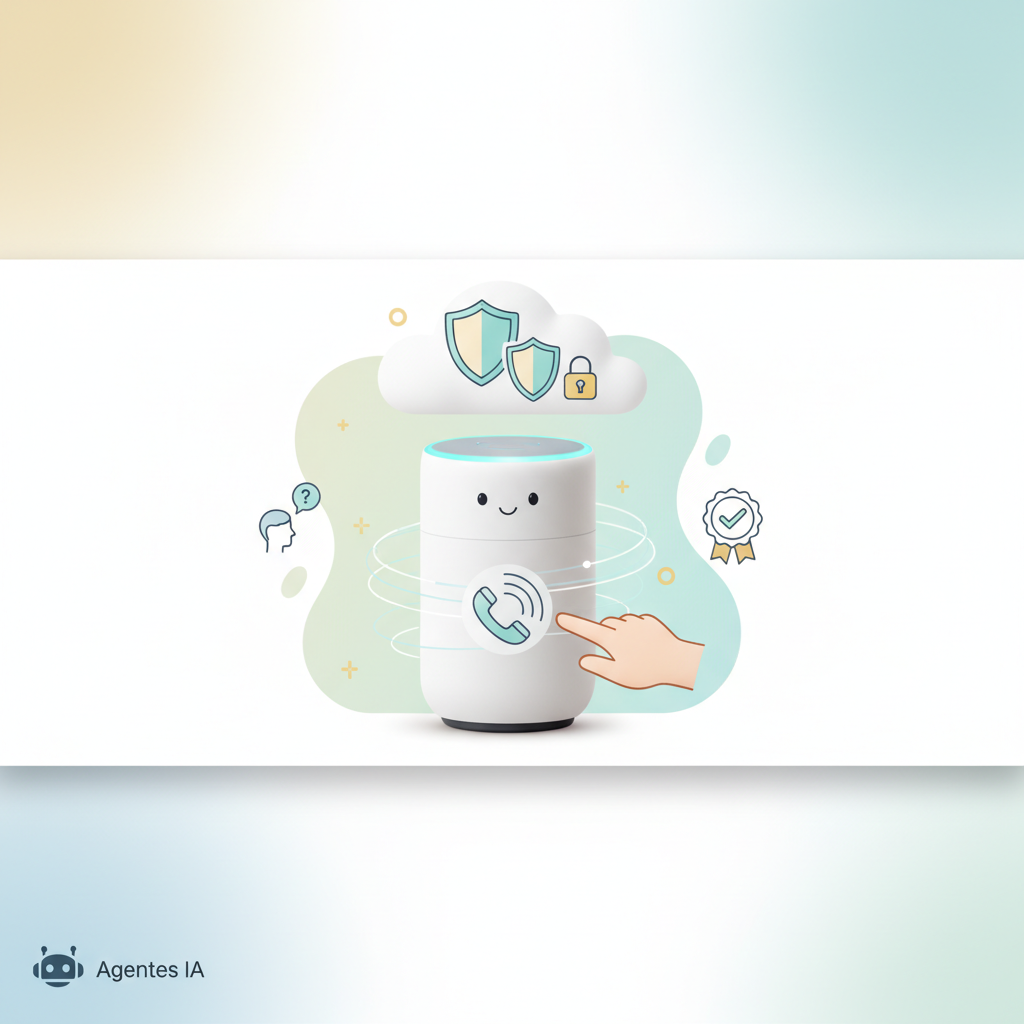
Security and Privacy in AI Voice Assistants: Trustworthy Call Delegation
In the era of digital transformation, automation through artificial intelligence has revolutionized customer interaction, with AI voice assistants becoming an increasingly common tool in businesses of all sizes. However, a crucial question arises: is it really viable and safe to delegate important calls to an AI? Security and privacy in AI voice assistants is not just a technological concern, but a fundamental pillar for customer trust and corporate integrity.
Implementing these solutions involves handling sensitive information, which forces organizations to prioritize data protection. At MarketiKing, we understand this need and work tirelessly to develop systems that are not only efficient but also impregnable in terms of data privacy in calls. This article delves into the mechanisms and best practices that ensure your telephone operations, even the most critical, can be managed by AI with maximum security and due respect for privacy.
The Critical Importance of Security and Privacy in AI Voice Assistants
The decision to incorporate AI voice assistants into call management cannot be taken lightly. When delegating interactions that may contain personal, financial, or strategic information, it is essential that companies ensure the total protection of that data. The lack of a robust approach to security and privacy in AI voice assistants can lead to serious consequences, from fines for non-compliance with regulations such as GDPR or LOPDGDD, to the irreparable loss of customer trust in AI.
Voice assistants are not mere automated response systems; they are intelligent interfaces capable of interpreting, processing, and, at times, storing highly confidential information. Imagine a scenario where a voice assistant handles an important complaint or a customer's financial query. The information shared must be treated with the same or even greater diligence than if it were handled by a human operator. This underscores the need to implement cutting-edge security protocols and a strict privacy policy from the system's conception.
Common Challenges in Data Protection
The implementation of AI voice assistants presents unique challenges in terms of data protection. Some of the most relevant include:
- Software Vulnerabilities: AI systems, like any software, can have vulnerabilities that hackers could exploit. Secure development and constant updates are crucial.
- Unauthorized Access: The risk of unauthorized internal or external personnel accessing call recordings or transcripts is a real concern.
- Data Storage: Where and how conversation data is stored is vital. The geographical location of servers and compliance with local and international regulations are fundamental.
- Anonymization and Pseudonymization: In many cases, it is necessary to process data in such a way that it cannot be directly associated with an individual, or that it can be through an indirect identifier.
- User Consent: Obtaining explicit user consent for the recording and processing of their data is a legal and ethical requirement.
Key Components of Robust Security in AI Voice Assistants
To overcome these challenges and guarantee security and privacy in AI voice assistants, it is essential to implement a multifaceted strategy that encompasses both technology and processes. The key lies in a proactive and adaptive approach, which evolves with threats and regulations.
Encryption in Voice Bots: The First Line of Defense
Encryption in voice bots is the fundamental pillar upon which security is built. When a customer interacts with a voice assistant, their voice becomes data that is transmitted and processed. Without encryption, this data could be intercepted and read by malicious third parties. This is why end-to-end encryption protocols must be used for both data in transit and data at rest.
Data encryption in transit ensures that communication between the user and the voice assistant, as well as between the different components of the AI system, is unreadable if intercepted. This includes the encryption of voice, text transcripts, and any other exchanged data. On the other hand, data encryption at rest protects information stored in databases or in the cloud, ensuring that, even if an attacker gains access to storage servers, the data remains undecipherable without the encryption key.
- Encryption standards: The use of internationally recognized standards such as AES-256 for data encryption and TLS 1.2 or higher for secure communication is recommended. These standards are the foundation of modern digital security.
- Key management: Robust management of encryption keys, including their generation, secure storage, periodic rotation, and revocation, is as important as the encryption itself. MarketiKing implements advanced key management systems for this critical task.
Security by Design Architecture
Integrating security from the early stages of designing an AI voice assistant is crucial. This means that every architectural decision and every line of code is conceived with security in mind, minimizing vulnerabilities and making the system resistant to attacks.
Table 1: Security by Design Architecture Principles
| Security Principle | Description |
|---|---|
| Principle of Least Privilege | Each component or user only has the necessary permissions to perform their functions. |
| Separation of Duties | Different functions and data are isolated to limit the impact of a breach in a single part of the system. |
| Defense in Depth | Multiple layers of security, so that if one fails, others still protect the system. |
| Fail-Safe | In the event of an error or attack, the system must fall into a safe state that protects data. |
| Don't Trust Internal Network | Treat the internal network as potentially insecure, applying the same security measures as the external one. |
In practice, this translates into network segmentation, robust firewalls, intrusion detection systems (IDS) and intrusion prevention systems (IPS), and constant system monitoring. For more information on how AI can transform your business with secure architectures, see Transform Your Business with Custom Artificial Intelligence Services.
Regulatory Compliance and Regular Audits
Data privacy in calls is strictly regulated by laws such as GDPR in Europe and other equivalent legislations worldwide. AI voice assistants must be designed and operated in full compliance with these regulations. This implies:
- Data Protection Impact Assessments (DPIA): Conduct comprehensive analyses before implementing new functionalities to identify and mitigate privacy risks.
- Consent Management: Implement clear mechanisms to obtain, record, and manage user consent for the processing of their data.
- Data Subject Rights: Ensure users' ability to exercise their rights (access, rectification, erasure, restriction of processing, data portability, and objection).
- Security Audits: Engaging independent third parties to conduct regular security audits and penetration tests is essential to identify and correct potential weaknesses. At MarketiKing, we collaborate with cybersecurity experts to guarantee the robustness of our solutions.
Building Customer Trust in AI
Beyond technical implementation, customer trust in AI is a fundamental psychological factor. For customers to feel comfortable delegating sensitive information to a voice assistant, they need to understand that their data is secure and that their privacy is respected. This is achieved through transparency and effective communication.
Transparency and Clear Communication
- Inform the user: Before the interaction begins, the voice assistant must clearly inform the user that the conversation is being recorded (if it is) and for what purpose their data will be used. This can be done with an initial message: "This call may be recorded to improve service quality and security."
- Accessible privacy policies: Privacy policies should be easy to find, understandable, and detail how user data is collected, used, stored, and protected.
- Opt-out options: Offering users the option to interact with a human agent if they are not comfortable with AI is a strong indicator of respect for their autonomy. A true omnichannel call center with virtual assistants will always offer this alternative.
Use Cases and Success Stories
Companies in various sectors are already using AI voice assistants securely and successfully to handle important calls. For example, in the banking sector, virtual assistants manage balance inquiries, transfers (with robust authentication), and card blocks. In the healthcare sector, they offer information about appointments, on-call pharmacies, or general symptoms (always emphasizing that they do not replace medical consultation).
Table 2: Examples of Sensitive Data Managed by AI and Security Measures
| Type of Sensitive Data | Example of AI Use | Key Security Measures |
|---|---|---|
| Financial | Balance inquiry, transfers | End-to-end encryption, multifactor authentication, anonymization, PCI DSS compliance. |
| Personal Health | Schedule appointments, general medical info | Encryption, restricted access, HIPAA/GDPR compliance, data pseudonymization. |
| Personal Information (PII) | Contact data update, address | Encryption, role-based access control, access audits. |
| Strategic Commercial | Business order management | Robust authentication, detailed audit logging, granular authorization. |
These cases demonstrate that, with the proper implementation of encryption in voice bots and a rigorous security posture, AI is not only secure but can improve efficiency and customer experience. In fact, the IVR vs. AI assistants comparison shows how AI assistants outperform traditional systems in flexibility and adaptability to customer needs, provided security is a priority.
A Secure Future with AI Voice Assistants
The evolution of security and privacy in AI voice assistants is a dynamic and constantly improving field. As AI becomes more sophisticated, so do the techniques for protecting the data it handles. Investment in research and development in these areas is fundamental to maintaining an advantage against emerging threats.
At MarketiKing we are dedicated to offering AI solutions that not only drive operational efficiency and improve customer experience, but also set the highest standards of security and privacy. Our experience as an artificial intelligence agency allows us to build resilient and reliable voice assistant systems, ideal for your business in Majadahonda and beyond. If you want to know how we choose the best components for our solutions, we recommend our article on how to choose an artificial intelligence agency: ultimate checklist.
Ultimately, delegating important calls to an AI voice assistant is not only possible but highly beneficial, as long as security, privacy and transparency are prioritized. With the proper implementation of encryption in voice bots protocols, a robust security architecture, and a commitment to data privacy in calls regulations, companies can reap the benefits of this advanced technology without compromising customer trust or security.
Are you ready to take your customer service to the next level with AI voice assistants that guarantee maximum security and privacy? At MarketiKing, we are experts in creating customized solutions that adapt to your specific needs. Don't let security doubts prevent you from innovating. Contact us today and discover how we can help you implement smart voice assistants securely and efficiently, transforming your operations and strengthening your customers' trust.
Need help with your digital marketing?
Our team of experts is ready to take your business to the next level.
Request free quote