Ultimate Guide to ERP Implementation in Companies
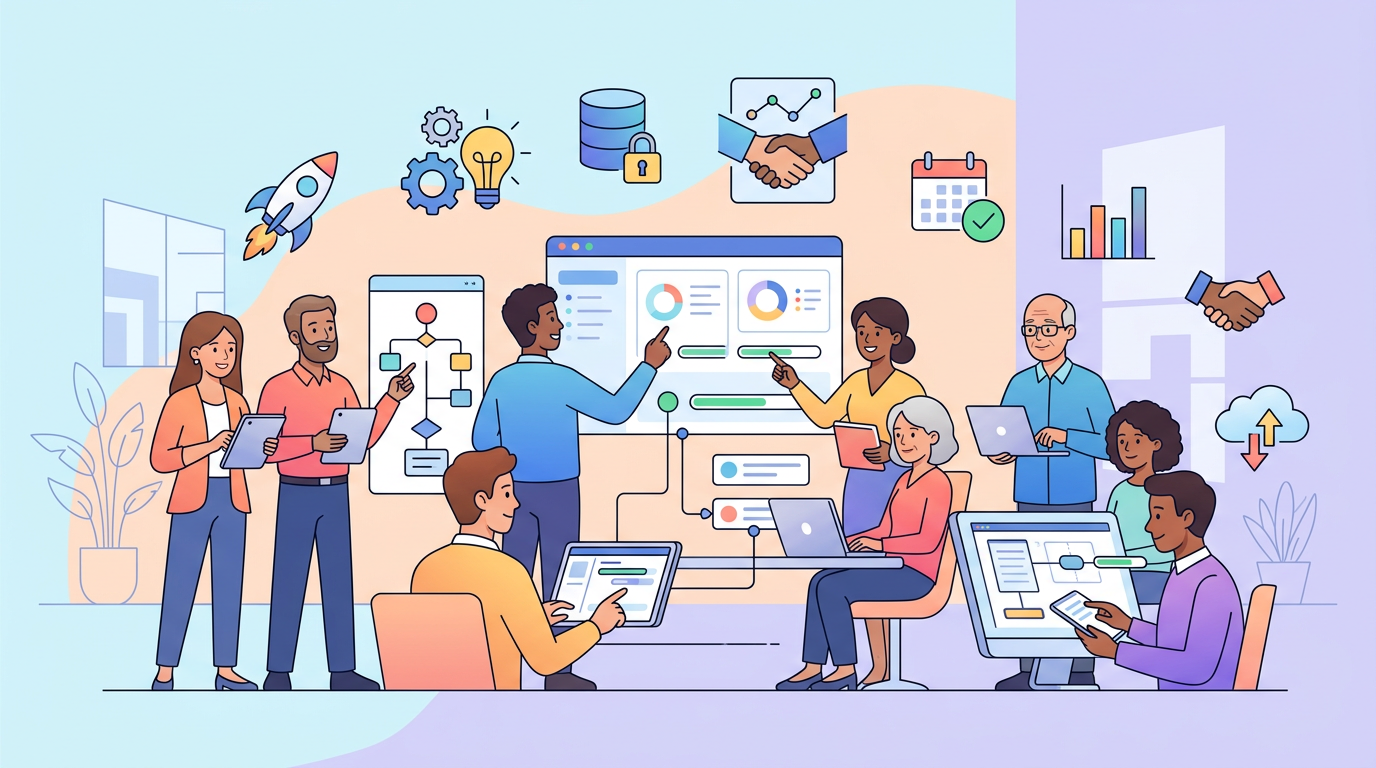
The ERP implementation in companies represents a fundamental strategic decision for any organization that aspires to optimize its operations, improve decision-making, and, ultimately, boost its growth. In an increasingly competitive market, having a robust and well-integrated ERP solution is not just an advantage, but a necessity. At MarketiKing, we understand that this process goes beyond software installation; it is a comprehensive transformation that requires planning, experience, and a reliable technological partner.
What is an ERP and Why is its ERP Implementation in Companies Crucial?
An ERP (Enterprise Resource Planning) is a software system that integrates and manages a company's main processes. This includes areas such as finance, accounting, production, inventory management, human resources, and sales. Its primary objective is to centralize information, eliminate departmental silos, and automate workflows, providing a 360-degree view of the company. ERP implementation in companies thus becomes a pillar for operational efficiency and strategic agility.
Value Proposition of a Successful ERP Implementation
A well-executed ERP implementation provides tangible benefits that directly impact business profitability and sustainability. Some of the most notable include:
- Process Optimization: Automation of repetitive tasks, reduction of manual errors, and standardization of workflows.
- Visibility and Control: Access to real-time data from all areas of the company, facilitating informed decision-making.
- Reduction of Operating Costs: Elimination of redundancies, optimization of resources, and improvement in inventory and production management.
- Improved Customer Experience: Greater efficiency in order management, tracking, and after-sales service.
- Regulatory Compliance: Facilitates auditing and compliance with tax and sector regulations.
Key Functionalities of a Modern ERP System
Current ERP systems are complex and modular solutions designed to adapt to the specific needs of each company. Common functionalities include:
- Financial and Accounting Management: General ledger, accounts receivable/payable, budgeting, financial reports.
- Supply Chain Management (SCM): Purchasing, inventory management, demand planning, logistics.
- Production Management: Production planning, quality control, work order management.
- Customer Relationship Management (CRM): Sales, marketing, customer service. To delve deeper into how a CRM can transform your business, we invite you to read our post: What Is a CRM and How Can It Transform Your Business?.
- Human Resources Management (HRM): Payroll, talent management, recruitment.
- Business Intelligence (BI): Interactive dashboards, data analysis, custom reports.
Considering all these functionalities is essential when planning your ERP implementation in companies.
Table 1: Key ERP Modules
| ERP Module | Description | Key Benefits |
|---|---|---|
| Finance and Accounting | Management of assets, liabilities, income, and expenses. | Financial control, accurate reporting, tax compliance. |
| Purchasing and Procurement | Supplier management, purchase orders. | Cost optimization, acquisition efficiency. |
| Sales and Marketing | Order management, customer management, campaigns. | Increased sales, improved customer relationships. |
| Production | Planning, quality control, scheduling. | Reduced cycle times, resource optimization. |
| Inventory | Stock tracking, warehouses. | Avoid stockouts, optimize inventory levels. |
The ERP Implementation Process in Companies: Crucial Steps
ERP implementation in companies is a complex project that requires a clear methodology and an expert team. At MarketiKing, based on our experience with clients in San Sebastián de los Reyes and throughout Spain, we have defined a proven approach:
- Analysis and Planning: Definition of objectives, analysis of current (AS-IS) and future (TO-BE) processes, identification of requirements, and selection of the appropriate ERP software. Fluid communication between the provider and the client is crucial to lay the groundwork for success.
- Design and Configuration: Adaptation of the software to the specific needs of the business, module configuration, customization of reports and, if necessary, development of integrations with existing systems. A customized CRM or specific adaptations can be key elements in this phase.
- Data Migration: Transfer of historical data from old systems to the new ERP. This step is critical and must be carried out with utmost precision to ensure data integrity.
- Testing: Performance of functional, integration, and user tests to ensure that the system functions correctly and meets the defined requirements. This is the time to identify and correct any inconsistencies.
- User Training: Training of personnel so they can use the new system efficiently and autonomously. Good training reduces resistance to change and accelerates adoption.
- Go-Live: Official launch of the ERP system. Intensive support is required during the first few weeks to resolve any issues that may arise.
- Continuous Support and Optimization: Once in production, the system must be monitored, optimized, and updated to ensure its performance and adaptability to future business needs. Our services include continuous support and AI optimization strategies to keep your business at the forefront.
Table 2: Common Mistakes to Avoid in ERP Implementation
| Common Error | Negative Impact | Strategy to Avoid It |
|---|---|---|
| Lack of Planning | Cost overruns, delays, dissatisfaction. | Clear definition of objectives, scope, and resources from the outset. |
| Resistance to Change | Low adoption, underutilization of the system. | Effective communication, continuous training, staff involvement. |
| Inadequate Data Migration | Errors in reports, erroneous decision-making. | Exhaustive verification, data cleansing, rigorous testing. |
| Excessive Customization | Complexity, vendor dependence, high costs. | Prioritize standard functionalities, customize only what is strictly necessary. |
| Lack of Management Commitment | Project without direction, loss of resources. | Explicit support from senior management, assignment of responsibilities. |
Why MarketiKing is Your Ally in ERP Implementation in Companies
At MarketiKing, we are committed to the success of our clients. Our proven methodology, along with our experience in various industries, allows us to address ERP implementation in companies comprehensively. We offer solutions adapted to every need, from CRM for companies to advanced integrations and continuous support.
Our team of experts in San Sebastián de los Reyes not only accompanies you in each phase of the project but also advises you to choose the best CRM solutions for modern companies and other complementary systems that boost your efficiency. We believe in technology as an engine for growth and are ready to transform your business management.
To learn more about how we can help you implement an effective ERP and other solutions, such as WhatsApp automation for companies or AI-powered phone reservation software, visit our homepage: MarketiKing.
Correct ERP implementation in companies is a transformative journey. We invite you to take the first step towards the digitalization and optimization of your business.
Are you ready to take your company's management to the next level with a strategic and efficient ERP implementation? At MarketiKing, we specialize in designing and implementing ERP solutions that perfectly adapt to your business model, guaranteeing a clear return on investment and sustainable growth. Don't miss the opportunity to optimize your operations and make smarter decisions. Contact us today for a free personalized consultation and discover how we can transform your company.
Need help with your digital marketing?
Our team of experts is ready to take your business to the next level.
Request free quote